
Guide · CIS
CIS Deductions Explained: Sole Trader vs Limited Company
And when you can actually get your money back. Plain English, no jargon.

Quick answer
CIS tax isn't lost, it's paid in advance. Sole traders get it back through Self Assessment. Limited companies offset it against PAYE and Corporation Tax, then claim any surplus once the tax year has ended.
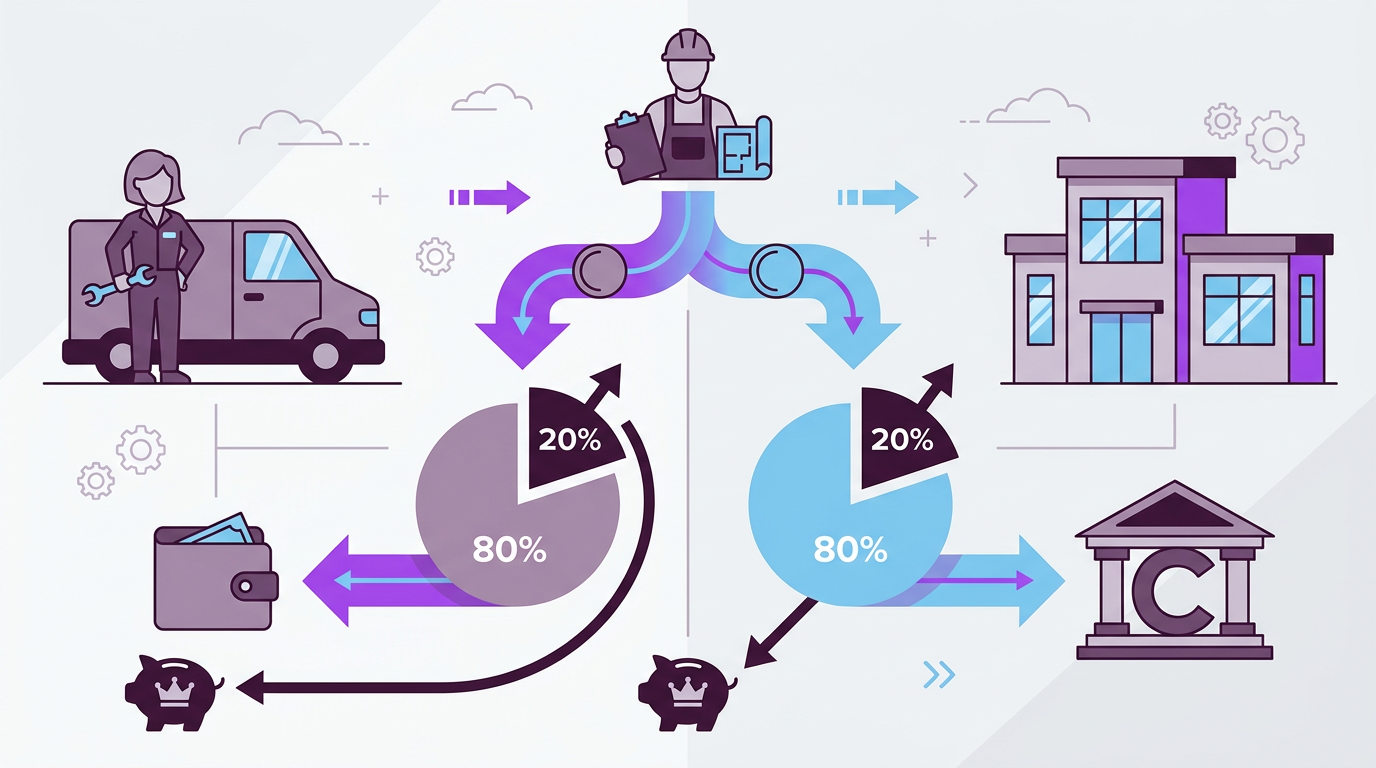
If you work in construction, you've probably noticed that contractors hold back 20% of your labour payments before the money reaches you. That's the Construction Industry Scheme (CIS) at work.
The good news: that money isn't gone. It's an advance payment towards your tax bill. The slightly less fun news: how and when you get it back depends on whether you're a sole trader or a limited company. Let's untangle it.
Contractor or subcontractor? Who's who in CIS
CIS has two sides, and you can be on both.
A contractor
A business that pays subcontractors for construction work: a building firm, developer or main contractor. It can also be a business outside construction that spends more than £3 million a year on construction work (HMRC calls these "deemed contractors"). Contractors register for CIS, deduct tax from their subcontractors, and report it every month.
A subcontractor
A self-employed person or a company that does construction work for a contractor. Sole traders, partnerships and limited companies, from bricklayers and electricians to groundworkers and plasterers.
Plenty of businesses are both: a subcontractor who takes on their own subbies for a bigger job becomes a contractor for those payments.
CIS in 30 seconds
When you work as a registered subcontractor, your contractor deducts 20% from the labour part of your invoice (not materials) and pays it to HMRC on your behalf. Unregistered? The rate is 30%, so get registered.
Think of it as paying your tax in instalments before you've even worked out what you owe.
Contractors: verify before you pay
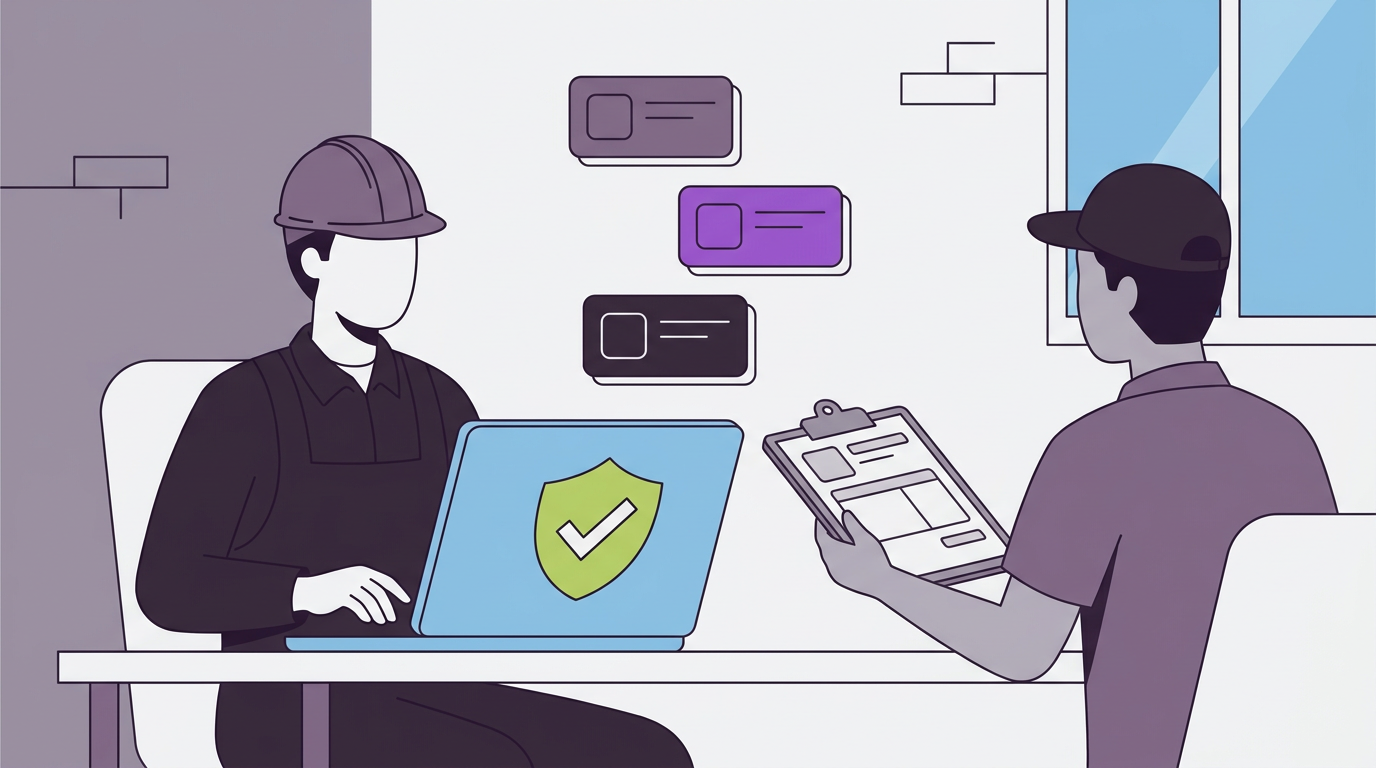
If you're a contractor, there's one step you can't skip: you must verify every subcontractor with HMRC before you make their first payment. Verification tells you whether they're registered for CIS and which rate applies:
0%
Gross Payment Status. You pay them in full.
20%
Registered. You deduct 20% from the labour element.
30%
Not registered or can't be matched. You deduct 30%.
How it works
- Get the subcontractor's name, trading name if they have one, and their UTR (Unique Taxpayer Reference). Companies also need the company registration number. Sole traders also need their National Insurance number.
- Verify them with HMRC, online or by phone, before the first payment.
- HMRC tells you the deduction rate to use.
- Keep a record of the verification and the rate in your books.
Why it matters
- Deduct the wrong rate and the shortfall can land with you as the contractor, not the subcontractor.
- Pay someone with no verification and you risk penalties from HMRC.
- You'll need these details for your monthly CIS return, due by the 19th of each month, and the payment and deduction statements you give each subcontractor.
HMRC may also tell you if a subcontractor's status changes, for example if they lose Gross Payment Status. So don't assume what was true at the start is still true.
If you're a sole trader
How it works
- You and your business are the same person in the eyes of HMRC.
- You keep track of your income, expenses and the CIS deductions on your monthly statements from contractors.
- After the tax year ends (5 April), you file a Self Assessment return and enter your total CIS deductions.
How you get it back
- HMRC works out your Income Tax and Class 4 National Insurance on your profit, then subtracts the CIS already paid.
- Tax bill bigger than CIS paid? You pay the difference by 31 January.
- CIS paid bigger than your tax bill? HMRC refunds the difference.
Can you claim mid-year?
Generally, no. You wait until the tax year ends and your return is filed. If you stop trading part-way through the year, you may be able to ask for it sooner.
If you're a limited company
Here's where it gets different, and where a lot of construction company directors get caught out.
How it works
- Your company is its own legal entity, so there's no Self Assessment for the company's CIS.
- CIS suffered is recorded in your books as tax already paid.
- Through your payroll, you report CIS deductions on your Employer Payment Summary (EPS).
How it's offset
- HMRC first uses your CIS credits against your company's PAYE and National Insurance bills.
- Anything left over can be used against your Corporation Tax.
- If there's still a surplus after that, you can claim a repayment.
Can you claim mid-year?
Mostly, no. Per HMRC's guidance, you can normally only claim a cash refund for a tax year once it has ended. The exceptions are if your company has stopped trading, or if you've had deductions taken after moving to Gross Payment Status. HMRC also expects all your FPS, EPS, monthly CIS returns (if you're also a contractor) and Company Tax returns to be up to date before they'll pay out. Expect a reply in around 8 weeks.
The monthly offsetting against PAYE/NIC does happen during the year, so a company with a payroll sees the benefit as it goes.
Side by side
| Sole trader | Limited company | |
|---|---|---|
| How CIS is recovered | Self Assessment | EPS (payroll), then Corporation Tax, then a repayment claim |
| Offset against | Income Tax & Class 4 NIC | PAYE/NIC first, then Corporation Tax |
| Mid-year cash refund? | Not usually | Only if you stop trading or move to Gross Payment Status |
| Key deadline | Self Assessment, 31 January | Monthly FPS/EPS, plus annual company tax return |
The most common CIS mistakes we see
- Not recording CIS properly in the books, so credits are missed or can't be matched to HMRC records.
- Forgetting the EPS, so a limited company doesn't claim its CIS credits against PAYE through the year.
- No payroll in the company, so there's nothing to offset against and cash sits with HMRC longer than it needs to.
- Missing Payment & Deduction statements from contractors, which HMRC may ask for if figures don't match.
- Out-of-date filings, which can hold up a refund altogether.
- Paying a subcontractor before verifying them, so the wrong rate is used and the contractor has to pick up the difference.
Not sure which setup is right for you?
Sole trader or limited company isn't just a CIS question. It affects your tax, your take-home pay and how much admin lands on your desk. That's why we look at the whole picture, not just the deductions.
At Figures UK we handle CIS every day for construction businesses across Peterborough, Market Deeping and beyond, all in Xero, all for a fixed monthly fee with unlimited advice. No year-end surprises.
Want a second pair of eyes on your CIS?
We'll give you a free accounts health check: a friendly look at your books, your CIS position and whether you're leaving money with HMRC that should be yours.
Frequently asked questions
What's the difference between a contractor and a subcontractor?
A contractor pays others for construction work and has to deduct CIS. A subcontractor does the work and has CIS deducted from their payments. You can be both.
Do I need to verify a subcontractor before paying them?
Yes. Contractors must verify each subcontractor with HMRC before the first payment, so you know whether to deduct 0%, 20% or 30%.
What details do I need to verify a subcontractor?
Their name, UTR and, depending on how they trade, their National Insurance number (sole traders) or company registration number (limited companies).
What's the CIS deduction rate?
20% for registered subcontractors, 30% if you're not registered, and 0% if you hold Gross Payment Status.
Can a limited company claim back CIS?
Yes. It's offset against PAYE/NIC through the year, then Corporation Tax, and any surplus can be reclaimed once the tax year has ended.
Can I get my CIS back mid-year?
Usually not. Sole traders wait for Self Assessment. Limited companies can normally claim after the tax year ends, unless they've stopped trading or moved to Gross Payment Status.
What's Gross Payment Status?
It means contractors pay you in full with no deductions. You must meet HMRC's tests on turnover, compliance and business history.
What do I need to claim a refund as a limited company?
Your Payment & Deduction statements, FPS/EPS records, PAYE and Corporation Tax references, and up-to-date filings.
⭐ Rated 4.9/5 from 47 reviews. Over 15 years helping businesses in Peterborough, Market Deeping and across Cambridgeshire.
Related reading
Sources: GOV.UK, "Claim a refund of Construction Industry Scheme deductions as a limited company" (updated August 2026); GOV.UK, "What you must do as a CIS subcontractor".
This article is general guidance, not personal tax advice. Rules are based on HMRC guidance at the time of writing (October 2026). Get in touch and we'll look at your own situation.
Get In Touch
Get In Touch With Us
Want a fixed monthly quote or a quick chat about switching accountants? Send us a message — we'll reply with clear next steps.
Worried about switching? Don't be.
You can move to Figures UK at any point in the year — no need to wait for year end. We handle the entire handover, including moving your records and transferring everything to HMRC, so the switch is seamless and stress-free for you.